Dear Community,
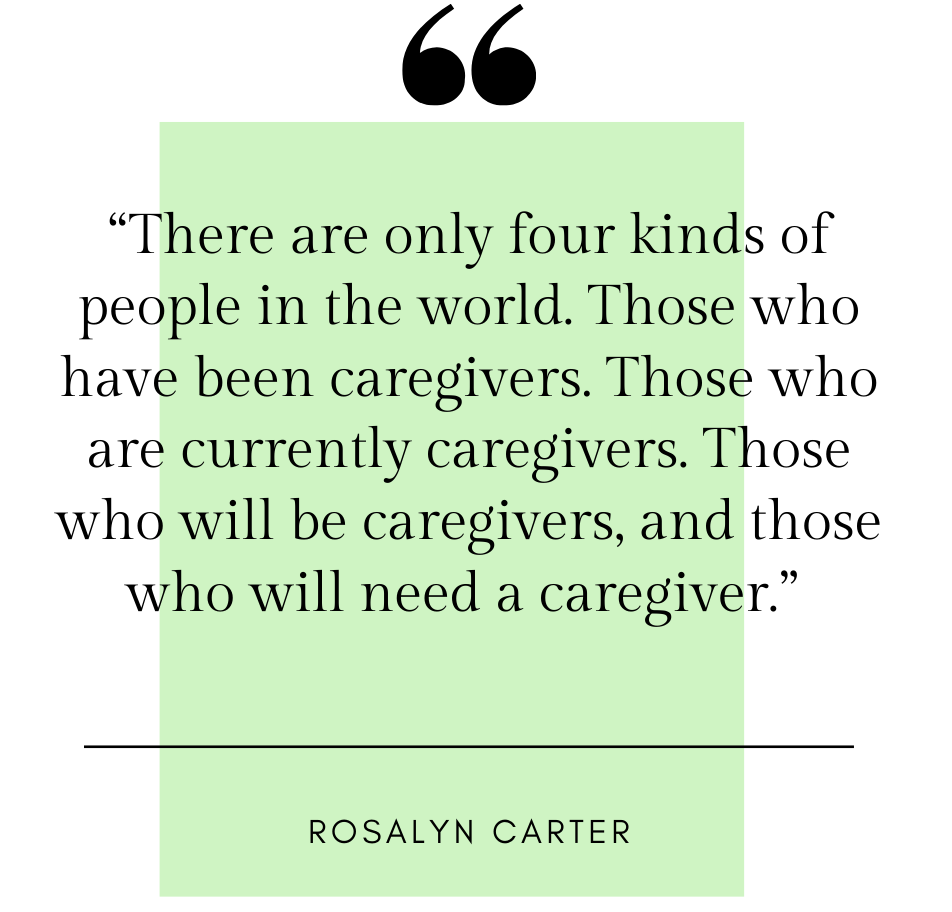
This month the topic of caregiving has been on my mind. Whether you have aging parents, an aging spouse, or care for someone with chronic illness or ongoing needs, this topic is one many of us can relate to. Even if you face a caregiving role in the future, this topic may have relevance as there is often a period of anticipation before caregiving becomes a reality.
Caregiving is usually performed by family and is many times an unpaid, on-call, isolating role that has an indefinite time frame and no weekends or holidays. Yet, few of us talk about it… Today, I want to define some of what caregiving can encompass, outline the different types of labor involved, and share a few tips and or resources for those curious minds who think it may be useful.
What is Caregiving?
Caregiving: to provide ongoing medical, personal, and or social support for someone who has limited independence in the world. This can include persons with chronic physical or mental illness, those who are aging, and or anyone with a significant disability or injury.
Types of caregiving
Physical: The physical labor involved with caregiving can include house keeping and maintenance, assistance with transport, errands, personal care, and more…
Emotional: The emotional aspects are varied and can include emotional support for a loved one who is lonely, scared, confused or in pain. The emotional load of grieving the old relationship and embracing the new caregiving role. It can also be emotionally taxing to manage and interface with family, caregivers, and medical teams who are involved in the ongoing care. The list goes on…
Mental: There are innumerable mental tasks involved in caregiving. Some tasks include managing doctor appts and prescriptions, purchasing household items and general needs items, financial management, bills and insurance needs, and medical decision making such as power of attorney…
Why does this matter?
I often support folks who are facing burn-out and compassion fatigue from caregiving.These are serious conditions that can cause a myriad of mental health issues. We all know the toll chronic stress can take, and compiling that with chronic grief or financial stress or juggling your life with caring for another, caregiving can quickly become too much. Outlining just some of the labor involved is important because it begins to frame the scope of this work, and the impact it can have on the mind, body, and emotional spirit.
How Can I Prepare?
Preparing for this role is somewhat of a luxery as many folks are suddenly apprised of their position. However, if you do have the time and ability to prepare there are some things you can do.
First, if you can talk with your loved one about how they would like their caregiving to go, that is essential.
Second, exploring the different caregiving roles that may emerge and discuss/decide on who will take this role and how it will be paid for (if it is something that will be purchased). If you cannot take on a role, do not take it on.
Third, respite care! Create a system of care that includes respite for everyone. Caregiving, as mentioned above, is on-call without weekends or holidays. A system that takes breaks and set backs into account will make the experience of both the caregiver and the one who is receiving care more fluid and stress free.
Fourth, labeling the leader. Caregiving is complicated and must keep multiple components connected and communicating. A leader or manager may be essential in keeping care organized and effective.
What If I Burn Out?
Burn out and compassion fatigue are real and should not be ignored. If you or someone you love is near burn-out or struggling to manage their self care while caregiving, therapy can be a place to find your way back to a manageable life and state of mind.I am available to talk with anyone who needs support or who has some questions about what to do next.
There ARE Resources…
If this sounds like a lot, you are right. I have compiled a few local and national resources below to help you at any stage of your caregiving journey.
Resource List
LOCAL NON-PROFITS & COMMUNITY CARE
Petaluma People Services Center (PPSC)
Services: Dedicated Caregiver Support Groups and an Adult Day Respite program for those navigating Dementia and Alzheimer's. Also handles home-delivered meals and volunteer transit.
Location: 25 Howard Street, Petaluma, CA
Website: cityofpetaluma.org/senior-services-resource-list
Redwood Caregiver Resource Center
Services: Clinical case management, family consultations, free virtual/call-in support groups, and emergency respite grants to prevent caregiver burnout.
Website: redwoodcrc.org/support-groups-sonoma
GOVERNMENT & FINANCIAL AID
Sonoma County In-Home Supportive Services (IHSS)
Services: A public Medi-Cal program that pays for a caregiver to assist individuals safely at home. Allows eligible individuals to hire family members or friends as paid caregivers.
Location: 5350 Old Redwood Hwy N #100, Petaluma, CA
Website: sonomacounty.gov/health-and-human-services/human-services/older-adults-people-with-disabilities/in-home-care/i-need-a-caregiver
SPECIALIZED CONDITION-SPECIFIC SUPPORT
Alzheimer's Association (North Bay Chapter)
Services: Caregiver training, care planning, localized dementia support groups, and a free 24/7 Helpline for crisis advice (800-272-3900).
Location: 1450 Neotomas Avenue, Santa Rosa, CA
Website: alz.org or 211sonoma.org
NAMI Sonoma County
Services: Family-focused peer support groups and education modules for those caring for an individual with complex or severe mental health conditions.
Website: namisonomacounty.org/your-journey/family-members-and-caregivers
NATIONAL DIRECTORIES
Eldercare Locator
Services: National public directory connecting you to regional Area Agencies on Aging (AAA) for local home health aides, meals, and transit.
Website: eldercare.acl.gov
Family Caregiver Alliance (FCA)
Services: Practical care sheets, step-by-step video tutorials (for tasks like safe physical transfers and medicine management), and caregiver stress kits.
Website: caregiver.org
In closing, caregiving is something we all face at one point or another. Caregiving is an essential role and although it is often unpaid and on-call it is labor non-the less.Whether it is by choice or not, this role has its hard ships along with its rewarding moments. I hope this letter has reminded you that it does not have to be isolating— there are resources! Most of all, I encourage you to be aware of potential burnout by asking for support long before that takes hold.Truthfully, unwinding burnout is harder than preventing burnout to begin with. I am always here for support and consult…
Until next time, take care and be well!
Warmly,
Cynthia Psaila, LMFT 83299